Splunk Topologies
In Splunk, choosing between a single-server deployment and a fully clustered architecture depends on several key factors: the volume of collected data, search concurrency, operational availability, and the long-term scalability of the system.
To guide these decisions, Splunk provides the Splunk Validated Architecture (SVA) -- a set of well-designed, field-tested reference architecture that ensure stability, performance, scalability, management convenience, and cost efficiency across different deployment sizes and requirements.
This article summarizes the most commonly used Splunk topologies, their components, and recommended use cases
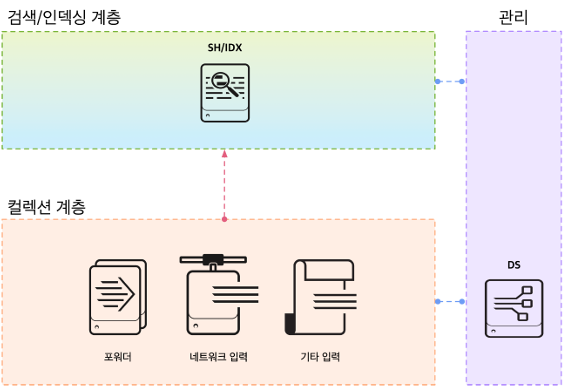
1. Single Server / Standalone (S1)
In this topology, every role is combined into a single Splunk instance -- including Indexing, Search, and system management.
Advantages
- Simple installation and management
- Minimal architectural complexity
- Lower cost and low operational overhead
Limitations
- No high availability → Single Point of Failure
- Limited scalability as data volume and search concurrency grow
- Not suitable for enterprise operations or long-term data retention
- Performance degrades under heavy ingest or search load
Use cases
- Daily log ingestion under ~300 GB/day
- Test, development, PoC, departmental analytics
- Organizations without strict availability requirements
Summary : Best for PoC, testing, and low-capacity environment. Not recommended for production at scale.
2. Distributed Clustered Architecture
As organizaitons grow, a single instance cannot handle the ingestion load, search concurrency, or availability requirements. Splunk therefore supports distributed and clustered designs.
2.1 Common Factors
Forwarder
- Collects system, application, and network logs
- Sends data to Indexers
- Represents the data collection layer
Indexer
- Stores raw data
- Creates tsidx files and searchable indexes
- Can be grouped into clusters for high availiablity
Cluster Master (CM)
- Manage Indexer clusters
- Controls replication factor, search factor
- Ensures peer node consistency and health
Search Head (SH)
- User-facing component
- Handles search requests, dashboards, alerts, and reports
Deployer (Optional, SHC only)
- Pushes apps and configurations to Search Head clusters
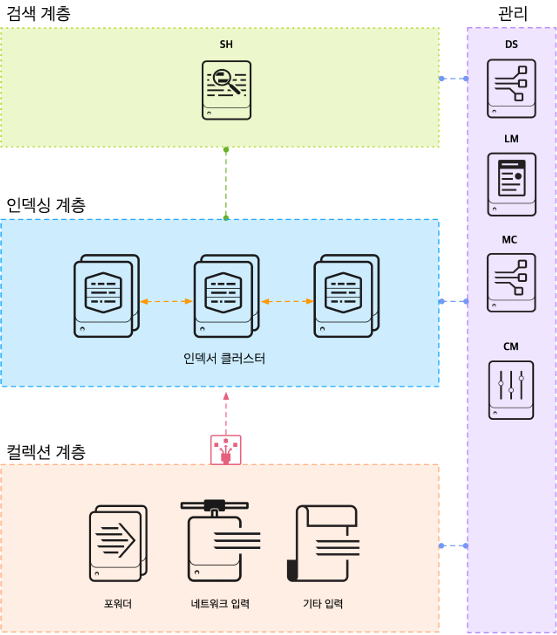
3. Distributed Clustered Deployment -- Single site (C1 / C11)
This topology introduces Indexer Clustering, where data is replicated across multiple Indexers to ensure data integrity and availability.
Advantages
- Ensures data integrity via replication
- Prevents data loss even if one Indexer fails
- Suitable for growing ingestion volumes
Limitations
- Search Head is not clustered, meaning :
- If SH fails, searches stop
- Limited ability to handle many simultaneous users
Use cases
- Environments requiring data durability but not necessarily search HA
- Medium-scale enterprise deployments
- Moderate ingestion volume
- Limited search concurrency

4. Distributed Clustered Deployment with Search Head Cluster -- Single Site (C3 / C13)
This topology expands on C1/C11 by adding a Search Head Cluster (SHC) for high availability and search scalability.
Advantages
- True high availability across both indexing and search layers
- Supports many concurrent users
- Distributes dashboard and search load
- Allows horizontal scaling
Limitations
- More complex to operate
- Requires additional hardware and network
- Governance and deployment via a Deployer is essential
Use cases
- High-traffic enterprise environments
- Security Operations centers (SOC)
- 24/7 analytics platforms
- Organizations requiring continuous search availability
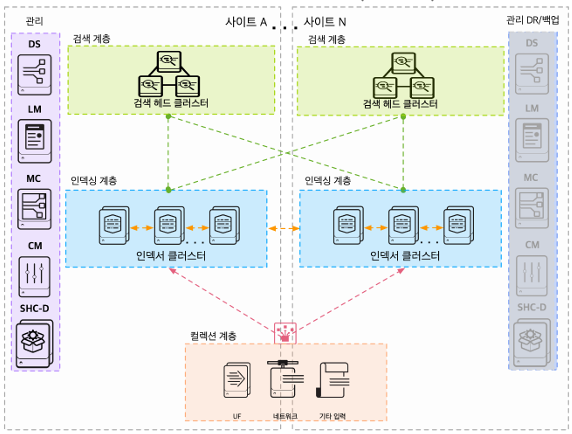
5. Multi-Site Distributed Cluster (M3 / M13 or higher)
For environments like major enterprises -- where logs exceed 100k events per day, 10k+ users query Splunk, 24/7 uptime is mandatory, and future DR or regional expansion is planned -- the multi-site topology is the recommended architecture.
Advantages
- Survives data center failure (HA + DR)
- Distributes ingestion and search load across regions
- Supports large-scale enterprise operations
- Recommeded for mission-critical, 24/7 SOC environments
- Enables future geographic expansion
Limitations
- Higher infrastructure cost
- Operational complexity
- Replication latency considertaions
- Deployment and upgrade cycles are slower
Use cases
- Large enterprises with strict HA and DR requirements
- Financial institutions, telecom, public sector, and manufacturing
- Companies with geographically distributed operations or data centers
- Organizations ingesting large volumes of logs (hundreds of GB/day to TB/day)
6. Architectural Considerations (RF / SF, SH Count, Network)
Replication Factor (RF)
Defines the number of raw data copies stored across Indexers.
- Higher RF = higher durability
- Recommended for enterprise : RF ≥ 3
Search Factor (SF)
Defines how many copies are fully searchable.
- Higher SF = ensures search continues even during node failure.
- Recommended : SF ≥ 2
Number of Search Heads
- SHC requires at least 3 Search Heads
- Large deployments : 5-7 SH recommended
Network / Multi-Site Latency
Replication between sites requires stable bandwidth and predictable latency.
7. Summary Comparison
| Topology | Availability | Scalability | Use Case |
| S1 (Standalone) | None | Limited | PoC, Dev |
| C1/C11 (Indexer Cluster) | Data availability | Limited search HA | Medium environments |
| C3/C13 (Indexer + SHC) | Full HA | Scales horizontally | Enterprise, SOC |
| M3/M13 (Multi-Site) | DR + HA | Enterprise scale | Nationwide or multi-region operations |
8. Conclusion
Splunk is far more than a logging tool; it becomes a real-time intelligence platform when deployed with the right topology. As data volumes grow and analytics become mission-critical, choosing the correct architecture is essential for long-term stability and performance.
Reference
- splunk-validated-architectures-ko.pdf
Powered By. ChatGPT